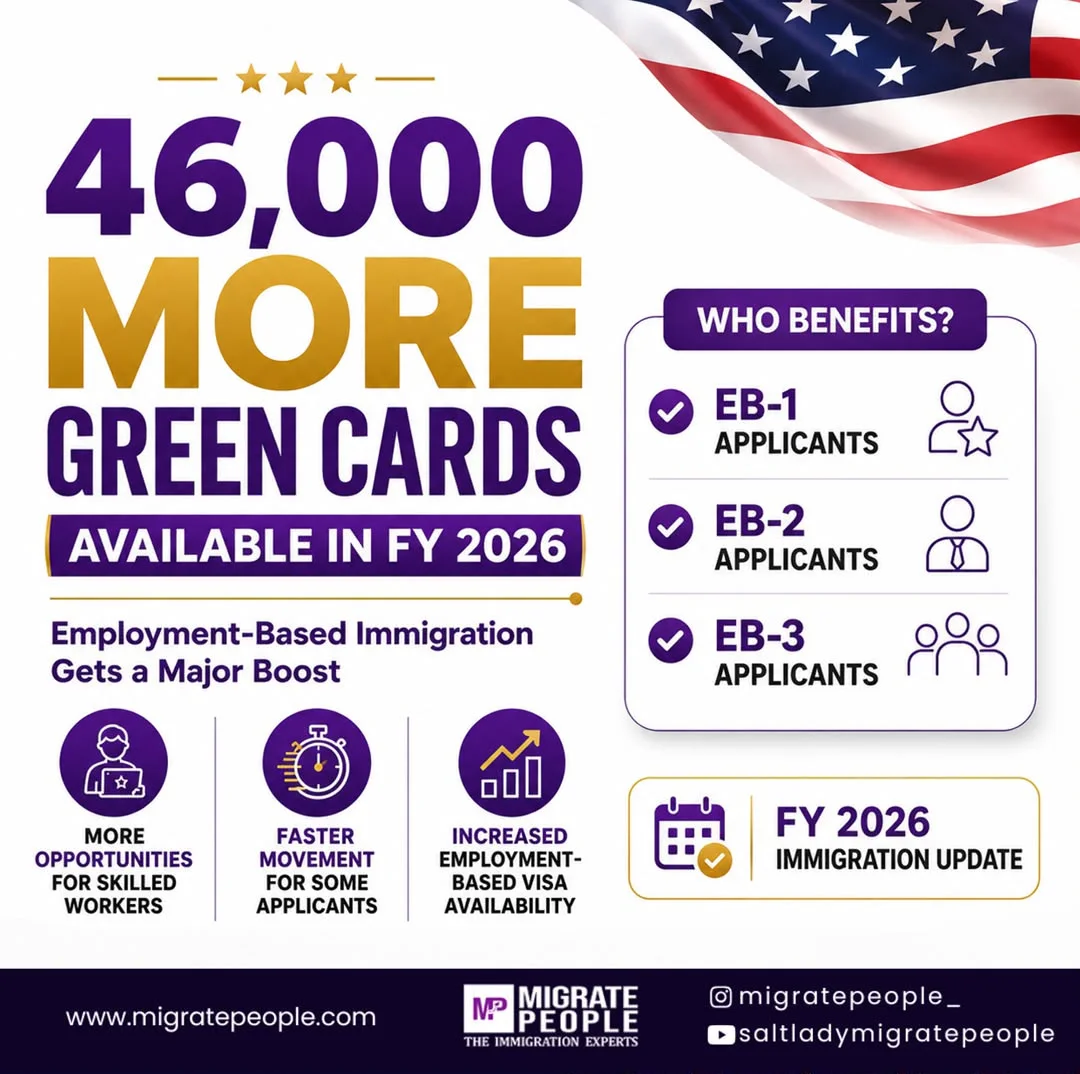
46,000 More Green Cards Available in FY 2026: What This Means for Skilled Workers and Employers
A Rare Immigration Opportunity Has Opened Up
Imagine being stuck in a long immigration queue, waiting years for your chance to become a permanent resident of the United States only to discover that tens of thousands of additional green cards have suddenly become available.
That’s exactly what is happening in Fiscal Year (FY) 2026.
The U.S. employment-based immigration system is receiving a significant boost, with approximately 46,000 additional employment-based green cards becoming available. This development could create faster processing opportunities, improve visa availability, and provide relief for thousands of highly skilled professionals seeking permanent residency in the United States.
For many foreign workers, researchers, executives, healthcare professionals, engineers, and other skilled individuals, this may be one of the most favorable employment-based immigration developments in recent years.
Why Are More Green Cards Available?
The U.S. immigration system allocates a fixed number of immigrant visas each year across various categories.
When family-sponsored immigrant visas go unused in a fiscal year, U.S. immigration law allows those unused numbers to “roll over” into the employment-based categories during the following fiscal year.
As a result, FY 2026 is expected to see approximately 46,000 additional employment-based immigrant visas, increasing opportunities for individuals pursuing permanent residency through employment.
This increase is particularly important because employment-based categories have experienced significant demand and backlogs in recent years.
Who Benefits From the Additional Green Cards?
The primary beneficiaries are applicants in the major employment-based categories:
EB-1: Priority Workers
The EB-1 category is designed for individuals who demonstrate extraordinary ability or hold leadership positions in multinational organizations.
Eligible applicants may include:
- Outstanding researchers and professors
- Multinational executives and managers
- Individuals with extraordinary ability in sciences, arts, education, business, or athletics
Because of the increased visa numbers, eligible EB-1 applicants could experience improved visa availability and potentially shorter waiting periods.
EB-2: Advanced Degree Professionals and Exceptional Ability Workers
The EB-2 category serves professionals who possess advanced degrees or exceptional abilities in their fields.
Common applicants include:
- Engineers
- IT professionals
- Healthcare specialists
- Scientists
- Financial experts
- Researchers
Many professionals applying through employer sponsorship or the National Interest Waiver (NIW) pathway may benefit from the expanded allocation.
EB-3: Skilled Workers and Professionals
The EB-3 category remains one of the most popular employment-based immigration pathways.
This category generally covers:
- Skilled workers
- Professionals with bachelor’s degrees
- Certain other workers
The additional visa numbers could help reduce pressure on existing backlogs and improve movement in priority dates for qualifying applicants.
What Could This Mean for Applicants?
While additional green cards do not automatically eliminate backlogs, they can positively impact several aspects of the immigration process.
1. Faster Priority Date Movement
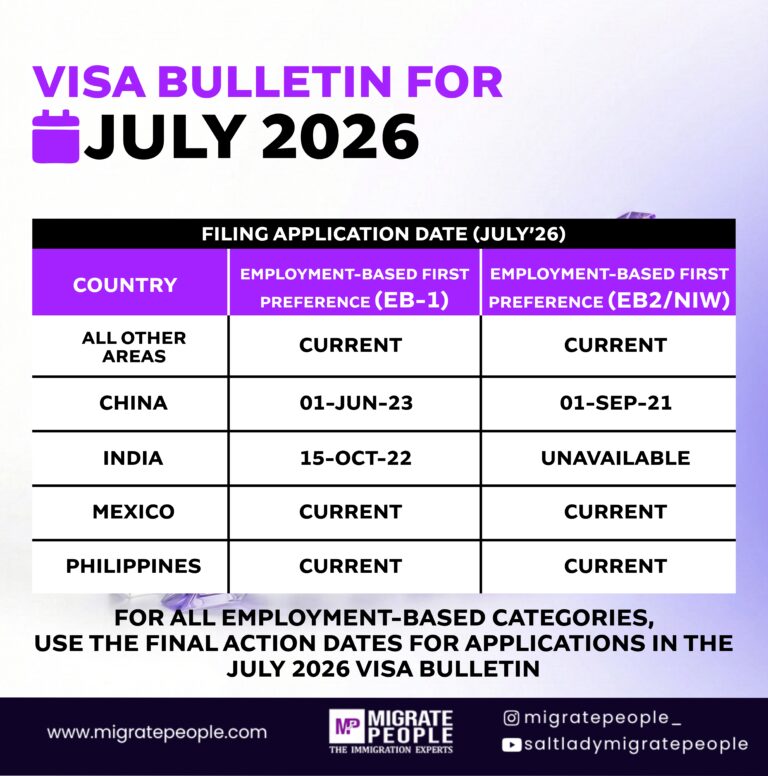
When more immigrant visas become available, the U.S. Department of State may advance priority dates more quickly in future Visa Bulletins.
This can allow applicants waiting for visa availability to move closer to permanent residency.
2. Increased Adjustment of Status Opportunities
Applicants already in the United States may find more opportunities to file or complete Adjustment of Status applications when visa numbers become current.
3. Greater Flexibility for Employers
U.S. employers facing talent shortages can potentially secure permanent residence options for valuable foreign employees more efficiently.
4. Improved Long-Term Immigration Planning
Individuals considering employment-based immigration may find FY 2026 to be a strategic period to begin or accelerate their immigration plans.
Important Reality Check
While this announcement is encouraging, applicants should avoid assuming that everyone will immediately receive a green card.
Several factors still influence outcomes, including:
- Country-specific demand
- Priority dates
- Visa Bulletin movement
- USCIS processing times
- Individual eligibility requirements
- Employer sponsorship timelines
Applicants from countries with historically high demand may continue to experience waiting periods despite the increased allocation.
What Should Applicants Do Now?
If you are considering an employment-based immigration pathway, now is the time to evaluate your options.
- Recommended steps include:
- Review your eligibility for EB-1, EB-2, or EB-3 categories
- Assess whether a National Interest Waiver (NIW) may apply to your situation
- Ensure your documentation is current and complete
- Monitor future Visa Bulletin updates
Consult with a qualified immigration professional to determine the most effective strategy
Early preparation can position applicants to take advantage of opportunities as additional visa numbers become available throughout FY 2026.
Final Thoughts
The availability of approximately 46,000 additional employment-based green cards in FY 2026 represents a significant opportunity for skilled workers, professionals, researchers, and employers across the globe.
Although backlogs will not disappear overnight, the increase could improve visa availability, accelerate movement in key employment-based categories, and provide a pathway to permanent residency for thousands of qualified applicants.
For many aspiring immigrants, FY 2026 may become a pivotal year—one where long-awaited opportunities finally move within reach.
Need help determining whether you qualify for EB-1, EB-2, EB-3, or a National Interest Waiver? Contact Migrate People today for a personalized immigration assessment and strategic guidance on your U.S. immigration journey.