USCIS Signature Rule Change in 2026: One Small Mistake Could Cost You Your Immigration Case
A Missing or Invalid Signature Could Now Have Serious Consequences
Imagine spending months preparing your immigration application, gathering documents, paying filing fees, and carefully completing every form, only to have your petition denied because of a signature issue.
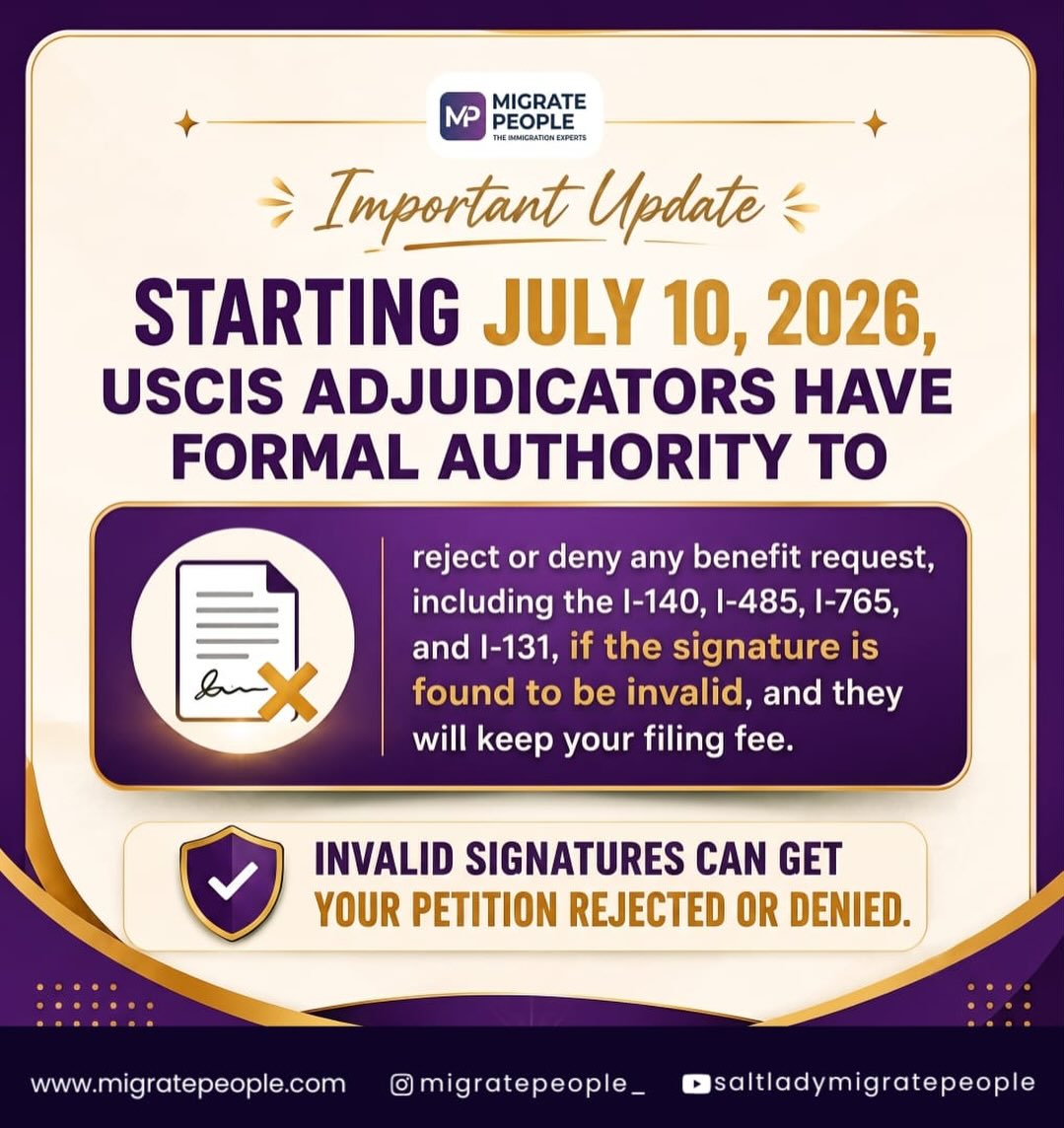
Beginning July 10, 2026, the U.S. Citizenship and Immigration Services (USCIS) is implementing a stricter approach toward invalid signatures on immigration benefit requests. Under this policy, USCIS adjudicators will have formal authority to reject or deny applications when signatures are determined to be invalid and applicants may lose their filing fees in the process.
For immigrants, employers, attorneys, and petitioners, this update serves as a critical reminder that even the smallest administrative mistake can have major consequences.
What Is Changing?
Starting July 10, 2026, USCIS officers will have explicit authority to reject or deny certain immigration benefit requests if they determine that the required signature is invalid.
Affected forms may include:
- Form I-140 (Immigrant Petition for Alien Worker)
- Form I-485 (Application to Register Permanent Residence or Adjust Status)
- Form I-765 (Application for Employment Authorization)
- Form I-131 (Application for Travel Document)
- Other immigration benefit requests requiring valid signatures
The most significant concern is that applicants may lose the filing fees associated with the application, even when the denial results solely from a signature-related issue.
Why Is USCIS Taking This Approach?
USCIS relies on signatures to verify that:
- The applicant reviewed the information provided.
- The information submitted is accurate and truthful.
- The applicant authorizes the filing of the request.
- Employers, petitioners, and legal representatives accept responsibility where required.
An invalid signature can raise concerns regarding authenticity, authorization, and legal accountability.
USCIS views signatures as a fundamental requirement, not merely a procedural formality.
What Is Considered an Invalid Signature?
While USCIS evaluates cases individually, common signature problems may include:
Missing Signatures
Applications submitted without the required signature.
Incorrect Signatories
Forms signed by someone who is not legally authorized to sign.
Altered or Inconsistent Signatures
Signatures that appear modified, copied, or inconsistent with other official records.
Unauthorized Electronic Signatures
Using signature methods that do not comply with USCIS requirements.
Signature Placement Errors
Signing in the wrong section or failing to sign required supplemental pages.
Forms Most Likely to Be Impacted
Form I-140
Employers and self-petitioners seeking employment-based immigration benefits must ensure all signatures are accurate and properly executed.
Form I-485
Applicants adjusting status to permanent residence should carefully review every signature field before submission.
Form I-765
Employment authorization requests could face delays, rejection, or denial due to signature deficiencies.
Form I-131
Travel document applicants should verify that all required signatures are present and consistent.
The Financial Impact Could Be Significant
Immigration filing fees continue to increase, and many applications involve substantial government costs.
If USCIS denies or rejects a filing due to an invalid signature:
- The application process may need to start over.
- Filing fees may not be refunded.
- Immigration timelines may be delayed.
- Priority dates and eligibility windows could be affected.
- Additional legal or administrative costs may arise.
For many applicants, the financial loss may be only part of the problem—the resulting delays could be even more damaging.
How Applicants Can Protect Themselves
The good news is that signature-related denials are often preventable.
Before submitting any immigration filing:
Review Every Signature Page
Never assume a signature field has been completed correctly.
Verify Signatory Authority
Ensure the individual signing has legal authority to do so.
Follow USCIS Signature Requirements
Different forms may have different signature rules. Always review the latest USCIS instructions.
Conduct a Final Filing Audit
Have an immigration professional or experienced reviewer conduct a final quality check before submission.
Keep Complete Records
Maintain copies of all signed forms and supporting documentation for your records.
What Employers and Immigration Attorneys Should Know
Employers sponsoring foreign workers should pay particular attention to internal filing procedures.
Human resource teams, corporate signatories, and legal representatives should establish clear verification processes to ensure:
- Proper signatures are obtained.
- Forms are reviewed before filing.
- Authorized representatives are identified.
- Filing packages meet USCIS requirements.
A simple oversight can now create significant consequences for both employers and employees.
Key Takeaway
The July 10, 2026 USCIS policy update sends a clear message: signatures matter.
What may appear to be a minor clerical error can now result in application rejection, petition denial, processing delays, and the loss of valuable filing fees.
Whether you are applying for a green card, employment authorization, travel documents, or employment-based immigration benefits, taking the time to verify every signature could save months of delays and thousands of dollars.
In immigration matters, attention to detail is no longer optional—it is essential.
Need Help Reviewing Your USCIS Application?
At Migrate People, we help individuals, families, and employers navigate complex U.S. immigration processes with confidence. Before submitting your petition, our team can help identify costly filing mistakes and ensure your application meets current USCIS requirements.
Contact Migrate People today for a professional immigration assessment and application review.